ASPIC

send to a friend share this

III International Congress in Health Sciences Research: Towards Innovation and Entrepreneurship - Trends in Aging and Cancer

Faculty of Health Sciences of the University of Beira Interior, in Covilhã (Portugal)


14 - 16 November, 2019


See more informations here: http://www.ubihealthsciencesresearch.pt/

When a Cell's "fingerprint" can be a weapon against cancer

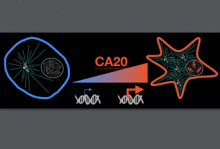
A research team led by Nuno Barbosa Morais, group leader at Instituto de Medicina Molecular João Lobo Antunes (iMM) in Lisbon, computationally analysed the expression of marker genes that are associated with a "fingerprint" of cancer cells in thousands of tumours and revealed its therapeutic potential in the fight against cancer. The study published in the scientific journal PLoS Computational Biology shows the types of tumours in which these genes are most active and identifies drugs with the potential to selectively eliminate cells that carry that label.


Quando uma "impressão digital" das células pode ser uma arma no combate ao cancro

A equipa de investigação liderada por Nuno Barbosa Morais, do Instituto de Medicina Molecular João Lobo Antunes (iMM) em Lisboa, analisou computacionalmente a expressão de genes marcadores que estão associados a uma "impressão digital" das células cancerígenas em milhares de tumores e revelou o seu potencial terapêutico na luta contra o cancro. O estudo publicado na revista científica PLoS Computational Biology mostra os tipos de tumores em que esses genes estão mais ativos e identifica fármacos com o potencial de eliminar seletivamente células com essa marca.


Current Status of Raf Kinase Inhibitor Protein (RKIP) in Lung Cancer: Behind RTK Signaling

Authors and Affiliations:

Ana Raquel-Cunha 1,2, Diana Cardoso-Carneiro 1,2, Rui M. Reis 1,2,3 and Olga Martinho 1,2,3*

1- Life and Health Sciences Research Institute (ICVS), School of Medicine, University of Minho, Campus de Gualtar, 4710-057 Braga, Portugal;

2 - ICVS/3Bs-PT Government Associate Laboratory, Braga/Guimarães, Portugal;

3 - Molecular Oncology Research Center, Barretos Cancer Hospital, Barretos, São Paulo, Brazil


Abstract:

Estado atual da proteína inibidora da quinase RAF1 (RKIP) em cancro do pulmão: na retaguarda da sinalização mediada por RTK’s

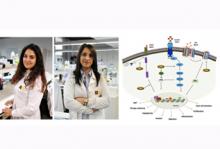
A equipa liderada por Olga Martinho, do Instituto de Investigação em Ciências da Vida e Saúde (ICVS) da Universidade do Minho, focou esta revisão no estado da arte sobre a proteína RKIP em cancro do pulmão, tendo apresentando ainda alguns dados originais resultantes de uma análise in silico usando a base de dados do TCGA.  A proteína inibidora da quinase RAF1 (RKIP) é uma importante moduladora de vias de sinalização intracelular relevantes, incluindo aquelas controladas pelo EGFR, como a via das MAPK.

Multicellular Human Gastric Cancer Spheroids Mimic the Glycosylation Phenotype of Gastric Carcinomas

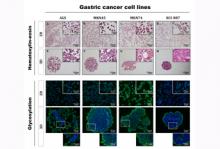
3-dimensional (3D) systems mimic better the in vivo features of the tumor, however, the in vitro studies of cancer have been traditionally performed using 2D methods. In this study, published in the journal Molecules, a high-throughput 3D methodology has been established for four different gastric cancer cell lines. These cancer models have been fully characterised, focusing on the glycosylation profile, since it is known that changes in glycosylation are key players in cancer development and progression.

Novos modelos 3D para melhor simular a glicosilação dos tumores

Sistemas tridimensionais (3D) reproduzem melhor as características in vivo do tumor, no entanto, os estudos in vitro do cancro têm sido tradicionalmente realizados usando métodos 2D. Neste estudo, publicado na revista Molecules, uma metodologia 3D de alta produtividade foi estabelecida para quatro diferentes linhas celulares de cancro gástrico. Esses modelos de cancro foram totalmente caracterizados, focando-se no perfil de glicosilação, uma vez que está descrito que modificações na glicosilação são alterações-chave no desenvolvimento e progressão do cancro.

EACR-AACR-ASPIC 2020 Conference: Tumor Microenvironment

THE ABSTRACT SUBMISSION DEADLINE WILL BE EXTENDED TO MONDAY 18TH NOVEMBER 2019


Dear ASPIC members,


EACR-AACR-ASPIC 2020 Conference: Tumor Microenvironment

The Abstract submission deadline will be extended to Monday 18th November 2019


Dear ASPIC members,


HPV73 a non-vaccine type causes cervical cancer

Finding a New Viral Cause of Cervical Cancer—Virtually all cases of cervical cancer are caused by high-risk types of human papillomavirus (HPV). In a study published online on April 9 in International Journal of Cancer, Ana Gradissimo, Ph.D., and Robert D. Burk, M.D., provide the first molecular evidence showing that HPV73—now classified as “possibly oncogenic”—definitely can cause cervical cancer.