ASPIC

send to a friend share this

HPV73 a non-vaccine type causes cervical cancer

Finding a New Viral Cause of Cervical Cancer—Virtually all cases of cervical cancer are caused by high-risk types of human papillomavirus (HPV). In a study published online on April 9 in International Journal of Cancer, Ana Gradissimo, Ph.D., and Robert D. Burk, M.D., provide the first molecular evidence showing that HPV73—now classified as “possibly oncogenic”—definitely can cause cervical cancer.

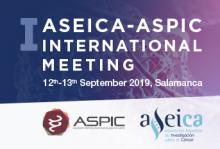
I ASEICA-ASPIC International Meeting - «Current Trends in Immunotheraphy Research and Treatment»

Centro de Investigación del Cáncer, Salamanca (Cancer Research Centre), Spain


12-13 Sptember, 2019


See more informations here: http://www.aseica.es/congreso-aseica/i-aseica-aspic-international-meeting/

I ASEICA-ASPIC International Meeting - «Current Trends in Immunotheraphy Research and Treatment»

Centro de Investigación del Cáncer, Salamanca (Cancer Research Centre), Spain


12-13 Sptember, 2019


See more informations here: http://www.aseica.es/congreso-aseica/i-aseica-aspic-international-meeting/

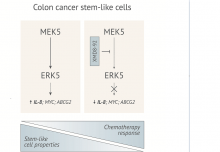
Targeting ERK5 in colon cancer stem-like cells

A research team led by Cecília Rodrigues, from the Research Institute for Medicines (iMed.ULisboa), Faculty of Pharmacy, Universidade de Lisboa, has identified a new molecular pathway underlying the maintenance of stem cell-like features in colon cancer cells. This study was published in Cell Death Discovery. The presence of cancer stem cells within tumors, including those from the colon and rectum, is associated with increased therapy resistance and worse clinical outcomes.

ERK5 como alvo em células tipo estaminal de cancro do cólon

Uma equipa de investigação liderada por Cecília Rodrigues, do Instituto de Investigação do Medicamento (iMed.ULisboa), Faculdade de Farmácia, Universidade de Lisboa, identificou uma nova via de sinalização celular subjacente à manutenção de características tipo estaminal em células de cancro do cólon. Este estudo foi publicado na revista Cell Death Discovery. A presença de células estaminais cancerígenas entre a massa heterogénea que constitui cada tumor, incluindo os carcinomas colorretais, encontra-se associada à resistência à terapia e a piores taxas de sobrevivência.

The Yeast Saccharomyces cerevisiae as a Model for Understanding RAS Proteins

It was published an updated critical literature review on human and yeast RAS pathways, specifically highlighting the similarities and differences between them. Moreover, it was also adressed the contribution of studying yeast RAS pathways for the understanding of human RAS and how this model organism can contribute to unveil the roles of RAS oncoproteins in the regulation of mechanisms important in the tumorigenic process, like autophagy.

The Yeast Saccharomyces cerevisiae as a Model for Understanding RAS Proteins

It was published an updated critical literature review on human and yeast RAS pathways, specifically highlighting the similarities and differences between them. Moreover, it was also adressed the contribution of studying yeast RAS pathways for the understanding of human RAS and how this model organism can contribute to unveil the roles of RAS oncoproteins in the regulation of mechanisms important in the tumorigenic process, like autophagy.

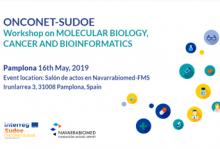
ONCONET-SUDOE - Workshop on Molecular Biology, Cancer and Bioinformatics

Salón de actos en Navarrabiomed-FMS, Pamplona, Spain


16 May, 2019


See more informations here: https://onconetmbcb.eu/

ONCONET-SUDOE - Workshop on Molecular Biology, Cancer and Bioinformatics

Salón de actos en Navarrabiomed-FMS, Pamplona, Spain


16 May, 2019


See more informations here: https://onconetmbcb.eu/

Modulating Autophagy as a Therapeutic Strategy for the Treatment of Paediatric High Grade Glioma

Authors and Affiliations:

Howarth A1, Madureira PA1,2, Lockwood G3, Storer LCD3, Grundy R3, Rahman R3, Pilkington GJ1, Hill R1.

1 Brain Tumour Research Centre, Institute of Biomedical and Biomolecular Sciences, IBBS, University of Portsmouth, PO1 2DT, UK

2 Centre for Biomedical Research (CBMR), University of Algarve, Campus of Gambelas, Building 8, Room 3.4, 8005-139 Faro, Portugal