Os tumores ALT compreendem aproximadamente 10% dos tumores humanos, desenvolvem-se maioritariamente em crianças (por exemplo, o osteossarcoma juvenil) e são particularmente resistentes à quimioterapia convencional. «Ao contrário do mecanismo canónico de alongamento dos telómeros, que ativa a enzima telomerase, essas células tumorais usam especificamente esse caminho alternativo que é insensível a abordagens terapêuticas baseadas na inibição da telomerase», explica Claus Azzalin, líder do grupo no iMM.
Cristina P.Matos, Zelal Adiguzel, Yasemin Yildizhan, Buse Cevatemre, Tugba Bagci Onderc, Ozge Cevik, Patrique Nunes, Liliana P. Ferreiraf, Maria Deus Carvalho Débora L. Campos, Fernando R. Pavan, João Costa Pessoa, Maria Helena Garcia, Ana Isabel Tomaz, Isabel Correia, Ceyda Acilan
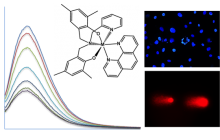
Uma equipa do Centro de Química Estrutural do IST, liderada por Isabel Correia, publicou recentemente no European Journal of Medicinal Chemistry um artigo em colaboração com uma equipa turca, liderada pela Ceyda Acilan, em que reportam um conjunto inovador de complexos de Fe(II) com potencial como fármacos anticancerígenos. O trabalho descreve a síntese, a caracterização, os estudos de citoxocicidade com várias linhas celulares e ainda estudos de mecanismo de morte celular que evidenciam a apoptose como forma preferencial para estes compostos.
Hyaluronic acid or hyaluronan is a biopolymer that accumulates in tumor microenvironments and around cancer cells. The accumulation is concomitant with changes of hyaluronan properties resulting in the generation of chains with different sizes. In this study, we mimic this peculiar tumor microenvironment and studied the response of gastric cancer cells. We selected two types of cells: AGS that have low expression of CD44 – a specific cellular receptor that recognize the hyaluronan and MKN45 with high CD44 expression.
O ácido hialurónico é um biopolímero que se acumula no ambiente tumoral, em especial à volta das células cancerígenas. Esta acumulação ocorre devido a alterações na síntese e degradação do HA, resultando na formação de cadeias poliméricas de diferentes tamanhos. Neste estudo, mimetizámos este peculiar microambiente tumoral (i.e. ácido hialurónico de diferentes tamanhos) e avaliámos a resposta de células de cancro gástrico.
The research that was developed at Barretos Cancer Hospital (Brazil) in collaboration with the ICVS of the University of Minho, was a partnership with the company Amazônia Fitomedicamentos Ltda and revealed mechanisms of action involved in the cytotoxicity promoted by the euphol molecule, obtained from the Brazilian biodiversity in glioblastoma cells. One of these mechanisms was the induction of autophagic process, which also contributed, in parts, to potentiate the effect of the chemotherapy used in clinical practice, temozolomide.