ASPIC

envie a um amigo share this

O sistema SCF/c-KIT na carcinogénese dos tecidos reprodutivos: o que nos diz a regulação hormonal?

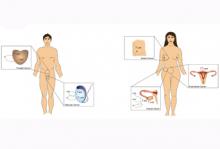
O stem cell factor (SCF) e seu receptor tirosina quinase c-KIT têm vindo a ser implicados na carcinogénese de tecidos reprodutivos masculinos e femininos. Vários estudos têm igualmente descrito que a expressão do sistema SCF/c-KIT, o qual está envolvido no controle de processos biológicos, como a apoptose, sobrevivência celular, diferenciação e migração, é controlada por hormonas. Este cenário leva-nos a questionar se uma ação hormonal desregulada afetando a normal expressão do SCF/c-KIT pode representar um marco importante na carcinogénese.

An immunohistochemical score to predict the outcome for oral squamous cell carcinoma


Luís Silva Monteiro 1, Márcio Diniz-Freitas 2, Saman Warnakulasuriya 3, Tomás Garcia-Caballero 4, Jerónimo Forteza 5, Máximo Fraga 6

1 Medicine and Oral Surgery Department, Instituto Universitario de Ciências da Saúde Norte, Paredes, C.P. 4585-116, Portugal

An immunohistochemical score to predict the outcome for oral squamous cell carcinoma

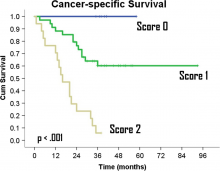
O cancro oral representa um sério problema mundial com uma incidência estimada (ASR) de 7,0 por 100 mil habitantes (Globocan 2012) com sobrevivências inferiores a 50% aos 5 anos na maioria dos países. Nas duas últimas décadas, foram estudados vários marcadores de prognóstico de cancro oral, mas estudados quase sempre de uma forma individualizada com resultados pouco claros para a sua translação clinica.

Introducing innate immunity to 3D tumour models

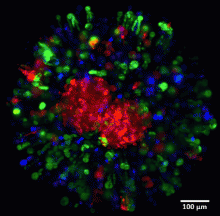
iBET researchers developed a new 3D cell culture model to study the impact of the immune microenvironment of solid tumours in tumour progression and therapeutic response. Cancer drug discovery has been limited by high rates of failure in clinical trials, despite positive laboratory tests suggesting good drug activity. Several types of tumour cell models are used in research labs and by the pharmaceutical industry for discovery and pre-clinical testing of new anti-cancer drugs.

Introducing innate immunity to 3D tumour models

iBET researchers developed a new 3D cell culture model to study the impact of the immune microenvironment of solid tumours in tumour progression and therapeutic response. Cancer drug discovery has been limited by high rates of failure in clinical trials, despite positive laboratory tests suggesting good drug activity. Several types of tumour cell models are used in research labs and by the pharmaceutical industry for discovery and pre-clinical testing of new anti-cancer drugs.

THOR methylation as potential diagnostic and prognostic pancreatic cancer biomarker

Authors and Affiliations:

Faleiro I1,2,3, Apolónio JD1,2,3, Price AJ4, De Mello RA1,3, Roberto VP1,2,3, Tabori U5, Castelo-Branco P1,2,3.

1. Department of Biomedical Sciences & Medicine, University of Algarve, Campus de Gambelas, Edifício 2, 8005-139 Faro, Portugal.

2. Centre for Biomedical Research (CBMR), University of Algarve, 8005-139 Faro, Portugal.

3. Algarve Biomedical Center, University of Algarve, Campus de Gambelas, 8005-139, Faro, Portugal.

Hipermetilação da região do THOR apresenta potencial como biomarcador epigenético para o diagnóstico e prognóstico do cancro do pâncreas

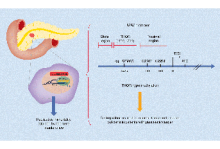
O cancro pancreático representa um dos cancros com maior taxa de mortalidade devido a um diagnóstico tardio, resultado da escassez de biomarcadores e estratégias terapêuticas. A procura de novos biomarcadores que possibilitem o diagnóstico em fases iniciais da doença é um dos maiores desafios para este tipo de cancro e avanços nesta área iriam possibilitar o tratamento atempado da doença antes da sua progressão.

Glicosilação de células de cancro gástrico como modulador do receptor oncogénico ErbB2

Autores e Afiliações:

Henrique O. Duarte1,2,3, Meritxell Balmaña1,2, Stefan Mereiter1,2, Hugo Osório1,2,4, Joana Gomes1,2 and Celso A. Reis1,2,3,4

1Institute for Research and Innovation in Health (i3S), University of Porto, 4200-135 Porto, Portugal

2Institute of Molecular Pathology and Immunology of the University of Porto (IPATIMUP), 4200-135 Porto, Portugal

Gastric Cancer Cell Glycosylation as a Modulator od the ErbB2 Oncogenic Receptor

Cell surface receptor tyrosine kinases (RTKs) play a central role in the initiation, promotion and progression of multiple human cancers, by triggering the aberrant activation of downstream signaling pathways implicated in malignant cell phenotype and behavior. In particular, overexpression of the human epidermal growth factor 2 (ErbB2) RTK constitutes a well-established molecular driver of carcinogenesis. RTK maturation is tightly regulated by protein N-linked glycosylation.

POLE somatic mutations in advanced colorectal cancer

Colorectal cancer (CRC) is one of the major causes of morbidity and mortality throughout the world. The etiological factors and pathogenic mechanisms underlying CRC development appear to be complex and heterogeneous. The majority of CRC cases occur sporadically, arising through the sequential accumulation of multiple genetic and/or epigenetic alterations involving genes that regulate cell growth and differentiation.