ASPIC

send to a friend share this

XIV International Symposium on Oncology Pharmacy Practice

Fairmont The Queen Elizabeth hotel, Montreal, Quebec, Canada


2-5 April, 2014


See more informations here: http://www.isoppxiv.org/

Goodbye Flat Biology: 3D Models and the Tumour Microenvironment

Harnack House, Berlin, Germany


2-5 November, 2014


See more informations here: http://www.eacr.org/goodbyeflatbiology/index.php

Goodbye Flat Biology: 3D Models and the Tumour Microenvironment

Harnack House, Berlin, Germany


2-5 November, 2014


See more informations here: http://www.eacr.org/goodbyeflatbiology/index.php

Prémio para desenvolvimento de biomateriais com potencial terapêutico na infecção por Helicobacter pylori

Uma das Medalhas de Honra l’Oréal Portugal para as Mulheres na Ciência – uma iniciativa conjunta da l’Oréal Portugal, da Comissão Nacional da UNESCO e da Fundação para a Ciência e a Tecnologia – foi atribuída este ano a Inês Gonçalves, investigadora do Instituto de Engenharia Biomédica (INEB) da Universidade do Porto. O projecto consiste em desenvolver um novo biomaterial capaz de eliminar a bactéria Helicobacter pylori, cuja persistência no estômago está associada ao cancro gástrico.


IARC publishes «World Cancer Report 2014»

The International Agency for Research on Cancer (IARC), the specialized agency of World Health Organization (WHO) for cancer, published the anual report revealing estimates for increased cancer burden – from the 14 million new cases per year in 2012 to 22 million next two decades.


IARC publica o «World Cancer Report 2014»

A International Agency for Research on Cancer (IARC), a agência especializada em cancro da World Health Organization (WHO),  publicou o seu relatório anual onde alerta para a estimativa de aumento do numero de novos casos de cancro – dos 14 milhões de novos casos/ano actuais para 22 milhões nas próximas duas décadas.


16th Annual John Goldman Conference on Chronic Myeloid Leukemia: Biology and Therapy

Inhibition of lactate efflux as strategy of breast cancer treatment

Authors and Affiliations:

Filipa Morais-Santos1,2, Vera Miranda-Gonçalves1,2, Sílvia Pinheiro1,2, André F Vieira3, Joana Paredes3, Fernando C Schmitt3,4,5,6, Fátima Baltazar1,2,* and Céline Pinheiro1,2,7,*

1 School of Health Sciences, Life and Health Sciences Research Institute (ICVS), University of Minho, Campus of Gualtar, Braga, Portugal

2 ICVS/3B’s – PT Government Associate Laboratory, Braga, Guimarães, Portugal

Inibição do transporte de lactato como estratégia para tratamento do cancro de mama

Rescue of wild-type E-cadherin expression from nonsense-mutated cancer cells by a suppressor-tRNA

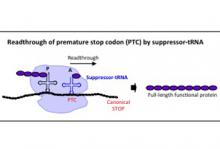
This work is based on using suppressor-tRNAs as a possible therapeutic tool for inherited cancer syndromes, where about 10-20% of the mutations described in are nonsense mutations. A suppressor-tRNA is a tRNA that can be altered to recognize premature stop codons (nonsense mutations), promoting their readthrough to produce full-length proteins. As a model, we used hereditary diffuse gastric cancer (HDGC), which is associated with mutations in CDH1 gene, encoding the adhesion molecule E-cadherin.