prostate cancer

envie a um amigo share this

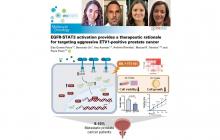
EGFR and STAT3 as therapeutic targets in ETV1-positive prostate cancer

Researchers from the Cancer Genetics Group at IPO Porto, in collaboration with the School of Medicine and Biomedical Sciences at the University of Porto (ICBAS), have uncovered a key singaling pathway driving the aggressiveness of prostate tumors that overexpress ETV1. The team found that simultaneous activation of the EGFR and STAT3 signaling pathways fuels the malignant behavior of these cancers.

EGFR e STAT3 como alvos terapêuticos em carcinoma da próstata ETV1-positivo

Investigadores do Grupo de Oncogenética do IPO Porto, em colaboração com o Instituto de Ciências Biomédicas Abel Salazar da Univerisdade do Porto (ICBAS), identificaram uma via de sinalização que impulsiona a agressividade de carcinomas da próstata com sobre-expressão de ETV1. A equipa de investigação descobriu que a activação das vias EGFR e STAT3 promove o comportamento maligno destes carcinomas.

Clinical advantages in providing artificial intelligence-assisted prostate cancer diagnosis: an innovative pilot study by Ipatimup

A new peer-reviewed study from the Ipatimup independently evaluated Paige Prostate, an FDA artificial intelligence (AI) tool, in clinical practice.

European Prostate Cancer Alliance - Webinar Series 2025: Spatial biology in prostate cancer

European Prostate Cancer Alliance - Webinar Series 2025: Spatial biology in prostate cancer

Extracellular vesicles derived-microRNAs predicting enzalutamide-resistance in 3D spheroid Prostate Cancer Model

Researchers from the Molecular Oncology and Viral Pathology Group (GOMPV) at the Research Center of IPO-Porto (CI-IPOP), in collaboration with researchers from Instituto de Investigação e Inovação em Saúde (i3S), established a 3D in vitro model of castration-resistant prostate cancer, applicable for identifying extracellular vesicle (EV)-derived microRNAs predictive of enzalutamide (ENZ) resistance development.

Diosgenin and G protein-coupled estrogen receptor as partners against prostate cancer

Study shows that diosgenin, a phytosteroid sapogenin, suppresses viability and promotes apoptosis of human prostate cancer cells with effects enhanced by the activation of the G protein-coupled estrogen receptor activation. 


Authors and Affiliations:

Marília I. Figueira1, Ricardo Marques2, Henrique J. Cardoso1, Lara R. S. Fonseca1, Ana P. Duarte1, Samuel Silvestre1 and Sílvia Socorro1


A diosgenina e recetor de estrogénios acoplado a proteína G como parceiros contra o cancro da próstata

Estudo mostra que a diosgenina, uma sapogenina fitoesteróide, suprime a viabilidade e promove a apoptose de células cancerígenas da próstata humana com efeitos potenciados pela ativação do recetor de estrogénios acoplado à proteína G.


Autores e afiliações:

Marília I. Figueira1, Ricardo Marques2, Henrique J. Cardoso1, Lara R. S. Fonseca1, Ana P. Duarte1, Samuel Silvestre1 and Sílvia Socorro1

Pathologists found an important diagnostic pitfall in prostate cancer

Pathologists demonstrate that GATA3 may be expressed in metastatic adenocarcinoma of the prostate, constituting an important diagnostic pitfall.


João Lobo 1 2 3, Nazario P Tenace 4, Sofia Cañete-Portillo 5, Isa Carneiro 1 2, Rui Henrique 1 2 3, Roberta Lucianò 4, Lara R Harik 6, Cristina Magi-Galluzzi 5

Study reveals the role of epigenetics in prostate cancer radioresistance

Researchers from the Cancer Biology & Epigenetics Group at the Research Center of IPO Porto, Portugal have revealed a pivotal link between epigenetic regulation and prostate cancer radioresistance. The study, entitled "Epigenetic Regulation of TP53 is Involved in Prostate Cancer Radioresistance and DNA Damage Response Signaling," was recently published in the prestigious journal Signal Transduction and Targeted Therapy.