ASPIC

envie a um amigo share this

2nd ASPIC International Congress

IPO - Porto Main Auditorium, Porto, Portugal


28-29 April, 2016


See more informations here: http://2ndcongress.aspic.pt

2nd ASPIC International Congress

IPO - Porto Main Auditorium, Porto, Portugal


28-29 April, 2016


See more informations here: http://2ndcongress.aspic.pt

Cancer Research UK Lung Cancer Centre of Excellence Inaugural Conference

Midland Hotel, Manchester, United Kingdom


13 - 15 December 2015


See more informations here: http://www.cancerresearchuk.org/support-us/find-an-event/the-lung-cancer-centre-of-excellence-conference-2015

Cancer Research UK Lung Cancer Centre of Excellence Inaugural Conference

Midland Hotel, Manchester, United Kingdom


13 - 15 December 2015


See more informations here: http://www.cancerresearchuk.org/support-us/find-an-event/the-lung-cancer-centre-of-excellence-conference-2015

Gender Summit 7 Europe 2015: Mastering gender in research performance, contexts, and outcomes

dbb forum Berlin, Berlin, Germany


06 - 07 November 2015, Berlin


See more informations here: http://gender-summit.com/gs7-about

Gender Summit 7 Europe 2015: Mastering gender in research performance, contexts, and outcomes

dbb forum Berlin, Berlin, Germany


06 - 07 November 2015, Berlin


See more informations here: http://gender-summit.com/gs7-about

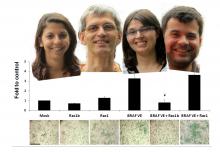
Expression of tumor-related Rac1b antagonizes BRAF-induced senescence in colorectal cells

Tumour initiation results from a mutation acquired, for example, in a cell proliferation-regulating oncogene, for example the MAP kinase BRAF in melanoma, thyroid, ovarian and colorectal cancer. As a protective response to this initial proliferative stimulus, tissues induce a growth-arrest program termed oncogene-induced senescence (OIS). It remains largely unknown by which mechanisms the initiated cells eventually escape from the dormant OIS state.

Expression of tumor-related Rac1b antagonizes BRAF-induced senescence in colorectal cells

Tumour initiation results from a mutation acquired, for example, in a cell proliferation-regulating oncogene, for example the MAP kinase BRAF in melanoma, thyroid, ovarian and colorectal cancer. As a protective response to this initial proliferative stimulus, tissues induce a growth-arrest program termed oncogene-induced senescence (OIS). It remains largely unknown by which mechanisms the initiated cells eventually escape from the dormant OIS state.

Prostate cancer cell in the context of co-overexpression

Diana Mesquita1, João D. Barros-Silva1, Joana Santos1, Rolf I. Skotheim2,3, Ragnhild A. Lothe2,3, Paula Paulo1,2,3 and Manuel R. Teixeira1,3,4

1 Department of Genetics and Cancer Genetics Group – CI-IPOP, Portuguese Oncology Institute, Porto, Portugal

Cancro da próstata num contexto de co-sobre-expressão celular

O cancro da próstata (PCa) constitui a segunda neoplasia mais frequente em homens em todo o mundo e é uma causa comum de morbilidade e consequente mortalidade, representando um problema importante em saúde pública. A falta de métodos mais exatos, capazes de diferenciar entre doença indolente e carcinomas mais agressivos, reforçou a necessidade de melhor compreender as alterações genéticas subjacentes e vias de sinalização por trás do processo de carcinogénese prostática.