ASPIC

send to a friend share this

Novel insight into the molecular bases of cancer and Parkinson's disease

Authors and Affiliattions:

Leonor Miller-Fleming,a,b, Pedro Antas,a, Teresa Faria Pais,a, Joshua L. Smalley,b,c, Flaviano Giorgini,b,1,

and Tiago Fleming Outeiro,a,d,e,1

a. Instituto de Medicina Molecular, 1649-028 Lisbon, Portugal;

b. Department of Genetics, University of Leicester, Leicester LE1 7RH, United Kingdom;

Novas pistas sobre as bases moleculares do cancro e doença de Parkinson

Um grupo de cientistas do Instituto de Medicina Molecular (IMM), liderado por Tiago Outeiro, e investigadores na Alemanha e no Reino Unido, estudaram um gene associado à doença de Parkinson e a forma como atua, abrindo portas ao desenvolvimento de novas estratégias terapêuticas contra esta doença, mas também contra o cancro. O trabalho de investigação vem mostrar que a doença de Parkinson pode ter uma causa genética - até recentemente os indícios apontavam para causas ambientais - trazendo nova esperança para o seu tratamento.

Position paper on behalf of the European Association for Cancer Research

Professors Carlos Caldas and Yosef Yarden recently wrote a position paper on the behalf of the European Association for Cancer Research, which was published in the European Journal of Cancer (EJC). It describes the irreplaceable leading role of basic research in the future of cancer therapy, and how allocating resources to basic research could be the key to unlocking new achievements in personalized cancer treatment. 


Position paper on behalf of the European Association for Cancer Research

Professors Carlos Caldas and Yosef Yarden recently wrote a position paper on the behalf of the European Association for Cancer Research, which was published in the European Journal of Cancer (EJC). It describes the irreplaceable leading role of basic research in the future of cancer therapy, and how allocating resources to basic research could be the key to unlocking new achievements in personalized cancer treatment. 


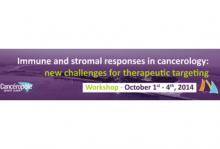
Immune and stromal responses in cancerology: new challenges for therapeutic targeting

Pen Bron Hotel, La Turballe, France


1 - 4 October 2014


See more informations here: http://www.cgo-workshop-vecto.fr/

Immune and stromal responses in cancerology: new challenges for therapeutic targeting

Pen Bron Hotel, La Turballe, France


1 - 4 October 2014


See more informations here: http://www.cgo-workshop-vecto.fr/

56th SIC Annual Meeting: Translating cancer biology into better patients management

Università degli Studi di Ferrara, Ferrara, Italy


11-13 September 2014


See more informations here: http://www.cancerologia.it/index.php?lang=en

Sialyl-Tn antigen (STn), which covers bladder cancer cells, contributes to the immune escape of these cells

Tumor cells often have aberrant post-translational modifications of their proteins. In bladder cancer, one of these modifications is the sialyl-Tn (STn) glycan, which is not expressed by normal cells and is highly expressed in high-grade bladder cancer cells. It is known that the immune response is affected by tumor cells, promoting tumor progression. However, little is known about the role of STn in the immune response and its influence on immune cells. Dendritic cells (DCs) play a crucial role in the immune response against tumor cells.

O antigénio Sialil-Tn (STn) que reveste as células de cancro de bexiga contribui para o escape imunológico destas células

As células tumorais apresentam frequentemente modificações pós-translacionais aberrantes das suas proteínas. Em cancro de bexiga, uma destas modificações é o glicano Sialil-Tn (STn), que não é expresso por células normais e encontra-se altamente expresso em células de cancro de bexiga de alto grau de malignidade. Sabe-se que a resposta imune é afetada pelas células tumorais, no sentido de promover a progressão tumoral. No entanto pouco se sabia sobre o papel do STn na resposta imune e da sua influência nas células imunológicas.

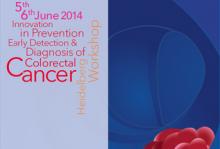
Workshop: Innovation in Prevention, Early-Detection & Diagnosis of Colorectal Cancer