ASPIC

envie a um amigo share this

Cell Symposia: Cancer, Inflammation, and Immunity

Paradise Point Resort & Spa, San Diego, USA


11 - 13 June, 2017


See more informations here: http://www.cell-symposia-cancerandinflammation-2017.com/

The Institute for Cancer Vaccines & Immunotherapy Third International Symposium on Immunotherapy

The Royal Society, London, United Kingdom


12 - 13 May, 2017


See more informations here: http://www.icvis.org.uk/

The Institute for Cancer Vaccines & Immunotherapy Third International Symposium on Immunotherapy

The Royal Society, London, United Kingdom


12 - 13 May, 2017


See more informations here: http://www.icvis.org.uk/

XXIV Edition of Porto Cancer Meeting - Liquid biopsy: bringing precision medicine closer to oncology

i3S – Instituto de Investigação e Inovação em Saúde, University of Porto, Porto, Portugal


11 - 12 May, 2017


See more informations here: https://portocancermeeting.i3s.up.pt/

XXIV Edition of Porto Cancer Meeting - Liquid biopsy: bringing precision medicine closer to oncology

i3S – Instituto de Investigação e Inovação em Saúde, University of Porto, Porto, Portugal


11 - 12 May, 2017


See more informations here: https://portocancermeeting.i3s.up.pt/

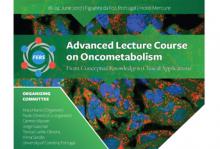
FEBS Advanced Lecture Course on Oncometabolism: From Conceptual Knowledge to Clinical Applications

Hotel Mercure, Figueira da Foz, Portugal


18-24 June, 2017


http://www.febsoncometabolism2017.eu/


FEBS Advanced Lecture Course on Oncometabolism: From Conceptual Knowledge to Clinical Applications

Hotel Mercure, Figueira da Foz, Portugal


18-24 June, 2017


http://www.febsoncometabolism2017.eu/


PH regulators as markers of diagnosis, prognosis and therapeutic targets in cancer

Most tumor cells depend on glucose for energy production and cellular building blocks needed for cell proliferation. However, most of the glucose consumed is transformed in lactic acid, which is then exported out of the cell, acidifying the extracellular medium. This tumor acidity is associated with higher aggressiveness, as well as with resistance to therapy. Cancer cells are able to survive in this acidic environment due to the function of proteins that regulate their pH, which expression in increased in several types of tumors.

Os reguladores de pH como marcadores de diagnóstico, prognóstico e alvos terapêuticos do cancro

A maioria das células tumorais é dependente de glucose para a produção de energia e síntese de componentes celulares necessários à sua proliferação. Contudo, esta glucose consumida é maioritariamente transformada em ácido lático, que é depois exportado da célula, acidificando o meio extracelular. Esta acidez está associada a uma maior agressividade, assim como a uma resistência à terapêutica, por parte do tumor.

30th Annual Meeting Danish Association for Cancer Research/ Dansk Selskab for Cancerforskning

Vilvorde Kursuscenter, Charlottenlund, Denmark


28 April, 2017 


See more informations here: http://www.dscf.dk/AnnualMeetings.htm