
Associação Portuguesa de Investigação em Cancro
Polyposis Syndrome Hyperplasic - Braga participates with new data
Polyposis Syndrome Hyperplasic - Braga participates with new data
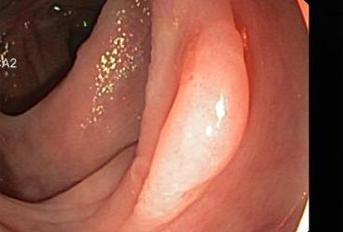
In September 2013, it was published in the edition of the Scandinavian Journal of Gastroenterology an original article on Hyperplasic Polyposis Syndrome resulting from clinical research of the Gatroenterology medical team of Braga Hospital. This paper seeks to contribute with new data to a progressive knowledge of this syndrome, probably not as rare as is thought today.
Authors and affiliations:
Ana Célia Caetano, MD, Department of Gastroenterology, Braga Hospital, Braga, Portugal. Life and Health Sciences Research Institute (ICVS), School of Health Sciences, University of Minho, Braga, Portugal. ICVS/3B’s – PT Government Associate Laboratory, Braga/Guimarães, Portugal.
Helena Ferreira, MD, Pediatric Department, Centro Hospitalar do Alto Ave, Guimaraes, Portugal.
João Soares, MD, Department of Gastroenterology, Braga Hospital, Braga, Portugal.
Aníbal Ferreira, MD, Department of Gastroenterology, Braga Hospital, Braga, Portugal. Life and Health Sciences Research Institute (ICVS), School of Health Sciences, University of Minho, Braga, Portugal. ICVS/3B’s – PT Government Associate Laboratory, Braga/Guimarães, Portugal.
Raquel Gonçalves, MD, Department of Gastroenterology, Braga Hospital, Braga, Portugal.
Carla Rolanda, PhD, Department of Gastroenterology, Braga Hospital, Braga, Portugal. Life and Health Sciences Research Institute (ICVS), School of Health Sciences, University of Minho, Braga, Portugal. ICVS/3B’s – PT Government Associate Laboratory, Braga/Guimarães, Portugal.
Abstract:
BACKGROUND. Hyperplastic polyposis syndrome (HPS) is a rare condition characterized by numerous hyperplastic polyps (HP) with a pancolonic distribution. Genetic and environmental factors, including smoking, may be responsible for phenotypic differences. OBJECTIVE. To characterize HPS patients' phenotype and to determine HPS risk and colorectal cancer (CRC) risk in the first-degree relatives (FDRs). PATIENTS AND METHODS. Eight HPS patients were followed at our Gastroenterology Department (2008-2012). The data included (1) macroscopic and histological analysis of polyps, (2) demographic information about patients and their families and (3) colonoscopy results of FDR that accepted a screening exam. RESULTS. Six of the eight index cases (ICs) had family history of CRC. Of the 24 FDRs screened, 5 were diagnosed with HPS. In our study, HPS and CRC prevalence in FDR was 625 and 9 times higher than the risk of the general population. Polyps over 10 mm were preferentially located in proximal colon (p < 0.001). Advanced polyps were larger (p < 0.001) than HP and more frequent in older patients (p = 0.0054). Nonsmokers had smaller polyps (p = 0.037) preferentially in the proximal colon (p = 0.04) and a lower age at HPS diagnosis. Patients with CRC family history manifest HPS at an earlier age and patients whose relatives had CRC before 50 years had larger polyps (p = 0.0475). Smokers with CRC family history had larger polyps than nonsmokers (p = 0.048). CONCLUSION. Despite the small sample, the results reflect the phenotypic heterogeneity of HPS as well as the increased family risk of HPS and CRC. This study points out that CRC family history and smoking influence HPS expression.
Journal:
Scandinavian Journal of Gastroenterology
Link: