The team from the Advanced Cell Models Laboratory in the Animal Cell Technology Unit, based at Instituto de Biologia Experimental e Tecnológica (IBET) and Instituto de Tecnologia Química e Biológica António Xavier (ITQB) has been invested on the development of novel advanced tumor cell models with the ability to recapitulate certain features of tumor microenvironment, namely their heterogeneity and complex cellular composition. It has been demonstrated by several authors that tumor microenvironment plays a major role on tumor progression and drug response.
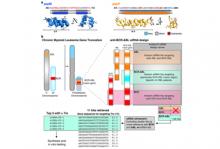
The authors developed a siRNA-based therapeutic approach in which the siRNA is delivered by pepM or pepR, two cell-penetrating peptides (CPPs) derived from the dengue virus capsid protein. These peptides have a dual role: siRNA delivery into cells and direct action as bioportides, i.e. intracellularly bioactive peptides, targetting cancer-related signaling processes.
Enhancing the efficiency of bortezomib conjugated to gold nanoparticles: an in vitro study on human pancreatic cancer cells and adenocarcinoma human lung alveolar basal epithelial cells
Gold nanoparticles have become promising vectors for cancer diagnosis and treatment. The present study investigates the effect of bortezomib (BTZ), a proteasome inhibitor, conjugated with pegylated gold nanoparticles (PEGAuNPs) in pancreatic and lung cancer cells.
Our findings showed that conjugation with PEGAuNPs enhance the BTZ growth-inhibition effect on human cancer cells (S2-013 and A549) and decreases its toxicity against normal cells (TERT- HPNE).
Head and neck cancers are considered late effects of low dose radiation exposure, namely in the former tinea capitis patients who were submitted to scalp irradiation, in 1950-1960, to induce epilation. In fact we have found a high prevalence of thyroid carcinoma and of basal cell carcinoma in the Portuguese tinea capitis (scalp ringworm) cohort we have been following since 2006. Recently, in the Israeli tinea capitis cohort, scalp irradiation has been shown as an independent risk factor for carotid atherosclerosis.
Francisco Beça: Department of Pathology and Cancer Research Institute, Beth Israel Deaconess Cancer Center, Boston, Massachusetts, United States of America, Harvard Medical School, Boston, Massachusetts, United States of America
«In many diseases, including cancer, DNA mutations create a stop codon in the wrong place. A single mutation can truncate a protein that should be 100 amino acids long to one that is just 15 long, rendering it completely useless. These are known as nonsense mutations, and they cause about 10 per cent of all genetic diseases.
It’s possible to make artificial tRNAs that recognise a premature stop codon, and instead of terminating the protein-making process, add the amino acid required to make a useful protein.