cancer

send to a friend share this

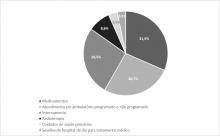
O custo do tratamento do cancro em Portugal

Conhecer o custo do tratamento da patologia oncológica é crucial para a gestão das unidades de saúde e do sistema de saúde. Para além dos aspetos demográficos, o forte impacto na perda de produtividade e o aumento dos custos clínicos fazem do cancro uma prioridade. É urgente analisar os custos associados às doenças oncológicas, para permitir conhecer, comparar e controlar os custos e resultados, promovendo a transparência do sistema de saúde. O objetivo deste trabalho pode ser definido pela seguinte questão: quanto custa diagnosticar e tratar doentes com cancro em Portugal?

Infection with Opisthorchis felineus induces intraepithelial neoplasia of the biliary tract in a rodent model

Authors and Affiliations:

Gouveia MJ1,2, Pakharukova MY3,4, Laha T5,6,7, Sripa B5,6,7, Maksimova GA3, Rinaldi G8, Brindley PJ8, Mordvinov VA3,9, Amaro T10, Santos LL10, Costa JMCD1,11, Vale N2,12.


1 Center for the Study in Animal Science, ICETA, University of Porto, Rua de D. Manuel II, Apt 55142, 4051-401 Porto, Portugal.

Infection with Opisthorchis felineus induces intraepithelial neoplasia of the biliary tract in a rodent model

Autores e Afiliações:

Gouveia MJ1,2, Pakharukova MY3,4, Laha T5,6,7, Sripa B5,6,7, Maksimova GA3, Rinaldi G8, Brindley PJ8, Mordvinov VA3,9, Amaro T10, Santos LL10, Costa JMCD1,11, Vale N2,12.


1 Center for the Study in Animal Science, ICETA, University of Porto, Rua de D. Manuel II, Apt 55142, 4051-401 Porto, Portugal.

Survival from cancer in the north region of Portugal: results from the first decade of the millennium

Cancer survival improvements in the north region of Portugal during the 2001-2010 were not universal for all cancer sites. A significant increase in net survival was observed for stomach, colon, pancreas, larynx, melanoma, breast, brain and central nervous system, thyroid, non-Hodgkin lymphoma and multiple myeloma. No significant changes in survival were found for gynaecological tumours neither for oesophagus, rectum, liver, prostate, kidney and bladder cancer.

Identification of the metabolic alterations associated with the multidrug resistant phenotype
in cancer and their intercellular transfer mediated by extracellular vesicles

Cancer multidrug resistance (MDR) is a major cause of therapeutic failure in cancer. MDR is mainly due to the overexpression of drug efflux pumps, such as P-glycoprotein (P-gp). Besides overexpression of drug efflux pumps, other molecular mechanisms are involved in the MDR phenotype, including metabolic alterations. Indeed, recent studies showed that it is possible to revert the MDR phenotype by inhibition of glycolysis with specific modulators.

8th EACR-OECI Joint Training Course: Molecular Pathology Approach to Cancer

De Rode Hoed’s Great Hall, Amsterdam, Netherlands


4 - 6 June 2018


See more informations here: http://www.eacr.org/conference/molecularpathology2018

8th EACR-OECI Joint Training Course: Molecular Pathology Approach to Cancer

De Rode Hoed’s Great Hall, Amsterdam, Netherlands


4 - 6 June 2018


See more informations here: http://www.eacr.org/conference/molecularpathology2018

Aberrant Glycosylation in Cancer: A Novel Molecular Mechanism Controlling Metastasis – PREVIEW

Major alterations in cell glycosylation occurring during cancer development and progression represent key features of tumor cell malignant behavior. In this publication, the authors preview and put in context the findings of Agrawal et al. (Cancer Cell, Vol. 31, Issue 6, 2017) that identified and characterized a novel molecular mechanism in which aberrant glycosylation actively tunes the metastatic capacity of melanoma cells by preventing the proteolytic cleavage of the L1CAM adhesion molecule.


Authors and Affiliations:

Aberrant Glycosylation in Cancer: A Novel Molecular Mechanism Controlling Metastasis – PREVIEW

Major alterations in cell glycosylation occurring during cancer development and progression represent key features of tumor cell malignant behavior. In this publication, the authors preview and put in context the findings of Agrawal et al. (Cancer Cell, Vol. 31, Issue 6, 2017) that identified and characterized a novel molecular mechanism in which aberrant glycosylation actively tunes the metastatic capacity of melanoma cells by preventing the proteolytic cleavage of the L1CAM adhesion molecule.


Autores e Afiliações:

2017 NCRI Cancer Conference

BT Convention Centre, Liverpool, United Kingdom


05 - 08 November, 2017


See more informations here: http://conference.ncri.org.uk/?utm_source=EACR&utm_medium=Website%20listing&utm_campaign=EACR_NCRI2017