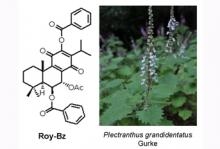
Considering the crucial role of p53 in cancer development and dissemination, p53-targeted therapies are amongst the most encouraging anticancer strategies. Inactivation of p53 by interaction with murine double minute (MDM)2 and MDMX is a common event in human cancers bearing wild-type (wt) p53. Consistently, simultaneous inhibition of the p53 interaction with both MDMs is crucial for full p53 reactivation in cancer.
Considering the crucial role of p53 in cancer development and dissemination, p53-targeted therapies are amongst the most encouraging anticancer strategies. Inactivation of p53 by interaction with murine double minute (MDM)2 and MDMX is a common event in human cancers bearing wild-type (wt) p53. Consistently, simultaneous inhibition of the p53 interaction with both MDMs is crucial for full p53 reactivation in cancer.
Om Rathore, investigador do Centro de Investigação em Biomedicina, acaba de receber uma bolsa da Federação Europeia de Bioquímica, com o projeto «Use of iCLIP to define the in vivo RNA binding sites of Salsa». O projeto envolve uma estadia no Laboratório de Biologia Molecular, em Mainz, na Alemanha, e tem como objetivo compreender o processo de divisão celular na Drosophila, a mosca da fruta.
Researchers at the Centre of Agronomic and Agro-Industrial Biotechnology of Alentejo (CEBAL) in Beja identified, in a natural population of Cynara cardunculus, two allelic variants in GAS (Germacrene A Synthase) gene sequence with significant associations between the cynaropicrin content (a lactone sesquiterpene) and the antiproliferative activity of a breast cancer cell line (MDA-MD-231), in vitro.
Investigadores do Centro de Biotecnologia Agrícola e Agro-Alimentar do Alentejo (CEBAL) em Beja identificaram, numa população natural de Cynara cardunculus, duas alterações alélicas na sequência do gene GAS (Germacrene A Synthase) com associações significativas entre o conteúdo em cinaropicrina (uma lactona sesquiterpénica) e a atividade antiproliferativa in vitro de células de cancro de mama (MDA-MD-231).
The stem cell factor (SCF) and its tyrosine kinase receptor c-KIT have been implicated in the carcinogenesis of male and female reproductive tissues. Also, several studies have reported that the tissue expression levels of SCF/c-KIT system, which is involved in the control of biological processes, such as apoptosis, cell survival, differentiation, and migration, is controlled by hormones. In this scenario, it is reasonable to question if deregulated hormone actions disturbing the SCF/c-KIT expression can be a relevant step towards carcinogenesis.
O stem cell factor (SCF) e seu receptor tirosina quinase c-KIT têm vindo a ser implicados na carcinogénese de tecidos reprodutivos masculinos e femininos. Vários estudos têm igualmente descrito que a expressão do sistema SCF/c-KIT, o qual está envolvido no controle de processos biológicos, como a apoptose, sobrevivência celular, diferenciação e migração, é controlada por hormonas. Este cenário leva-nos a questionar se uma ação hormonal desregulada afetando a normal expressão do SCF/c-KIT pode representar um marco importante na carcinogénese.