microenvironment

envie a um amigo share this

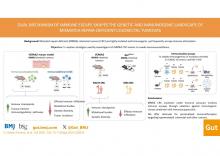
Dual immune evasion mechanism shapes MMR-deficient colorectal tumors

A team of researchers from the Institute for Research and Innovation in Health (i3S) at the University of Porto has identified persistent vulnerabilities in colorectal tumors that could be exploited to develop personalized therapeutic cancer vaccines. The study, published in the journal Gut, shows that although these tumors can evade immune surveillance, they retain neoantigens capable of eliciting an effective immune response.

Duplo mecanismo de evasão imunitária molda tumores colorretais MMRd

Uma equipa de investigadores do Instituto de Investigação e Inovação em Saúde (i3S) da Universidade do Porto identificou vulnerabilidades persistentes em tumores colorretais que poderão ser exploradas no desenvolvimento de vacinas terapêuticas personalizadas contra o cancro. O estudo, publicado na revista Gut, demonstra que, apesar de estes tumores conseguirem escapar ao controlo do sistema imunitário, mantêm neoantigénios capazes de desencadear uma resposta imunitária eficaz.

KRAS oncogenic signaling extends beyond cancer cells to orchestrate the microenvironment

This review covers the findings related to alterations in the tumor microenvironment induced by KRAS activation in cancer cells, bringing to attention new mechanisms of KRAS-induced tumor progression which may have a great impact on the design of new therapies that target cancer cells by abrogating their interaction with the tumor microenvironment.


Authors and Affiliations:

Integrated computational modeling of bone metastasis, microenvironment and therapy

In the context of the multidisciplinary research project CancerSys - Multiscale modeling for personalized therapy of bone metastasis, financed by FCT and involving the institutions IDMEC, INESC-ID, IT (Instituto Superior Técnico, Universidade de Lisboa), Hospital de Santa Maria and IMM, a dynamic computational model capable of representing the biochemical aspects of bone metastases growth and the effect of the therapies used in this disease.